Texas heat is hard on used cars. Long, hot summers between Austin and San Antonio put steady stress on a car's air conditioning, cooling system, battery, tires and cabin materials. Before you buy a used car here, test the AC from a hot start, look closely at the cooling system and tires, and check the age of the battery and tires. None of this replaces a full inspection, but it tells you where to focus it.
Why Texas heat matters when you shop for used cars
A used car in Central Texas may have spent years parked in direct sun and idling in summer traffic with the AC running. That use pattern does not show up on a title or a history report. You find it by looking at the parts that work hardest in heat and asking the seller the right questions.
Heat also changes how a car performs day to day. According to fueleconomy.gov's hot weather page, air conditioning use can reduce a conventional vehicle's fuel economy by more than 25% in very hot conditions, especially on short trips, and the effect on hybrids, plug-in hybrids and electric vehicles can be even larger on a percentage basis. So an AC system that struggles is both a comfort problem and a running-cost problem.
Air conditioning: test it the hard way
The AC is the system you will notice first in July. Test it in conditions close to real use.
- Start with a hot car. If you can, see the car after it has been parked in the sun, not after the seller ran it for an hour in a shaded driveway.
- Turn the AC to max and the fan to high. Within a few minutes the air from the center vents should feel clearly cold.
- Test it at idle and while driving. Some weak systems cool at highway speed but blow warm air at a stoplight. Sit in traffic for a few minutes if you can.
- Cycle every setting. Check all fan speeds, recirculation, defrost and each vent position. A blend door problem can send hot air to one side only.
- Listen and smell. Note any grinding or squealing when the compressor engages, and any musty smell from the vents.
- Look under the car after the test. Clear water dripping under the passenger side is usually normal AC condensation. Colored or oily fluid is not, and should go on your inspection list.
If the seller says the AC "just needs a recharge," treat that as an unknown repair, not a minor one. Refrigerant leaks out of a sealed system only when something is leaking. Ask a mechanic to find the cause during a pre-purchase inspection.
Cooling system: the engine's heat defense
The engine cooling system works hardest in summer traffic with the AC on. Problems here can turn into expensive engine damage.
Check these items with the engine cold:
- Coolant level and color. The reservoir level should sit between the marks. Coolant that looks rusty, sludgy or oily is a warning sign.
- Hoses. Squeeze the radiator hoses. They should feel firm, not brittle, cracked or mushy.
- Radiator and fans. Look for green, orange or pink crust around seams, which can point to past leaks. With the engine warm and the AC on, the electric cooling fan should run.
- Signs of past overheating. Ask directly whether the car has ever overheated. Look for a stained engine bay or a recently replaced head gasket in the service records.
During the test drive, watch the temperature gauge in stop-and-go traffic. It should settle in the normal range and stay there. A gauge that creeps up at idle and drops at speed suggests an airflow or fan problem.
Battery: check its age and condition
Heat is hard on the 12-volt battery, and failures often show up suddenly. A car that starts fine on a test drive can still have a weak battery.
- Find the date. Most batteries have a date sticker or stamped code on the case. Ask the seller when it was last replaced and look for a receipt.
- Look for corrosion. White or blue-green buildup on the terminals can cause hard starts.
- Ask for a load test. Many parts stores and repair shops can test a battery. Include it in your inspection request.
- Watch for slow cranking. If the engine turns over slowly after the car has been sitting, plan on a battery.
A battery is a normal wear item, so an old one is not a reason to walk away. It is a reason to factor a replacement into your offer. See how to negotiate a used car price.
Tires: sun, heat and age
Texas sun and hot pavement work on tires even when tread looks fine. Check age as well as tread.
The NHTSA tire safety page explains that the last four digits of the DOT Tire Identification Number on the sidewall show the week and year the tire was made. The code may be on only one side, so check both sidewalls. NHTSA notes that some vehicle and tire manufacturers recommend replacing tires that are six to 10 years old regardless of tread wear, so check the owner's manual for the car you are considering.
Also check:
- Cracking. Fine cracks in the sidewall or between tread blocks can come from age and sun exposure.
- Tread depth. NHTSA's guidance is tread of at least 2/32 of an inch on all tires.
- Even wear. Uneven wear can point to alignment or suspension problems.
- Correct pressure. The recommended pressure is on the label usually found on the driver's door edge, not the maximum number molded into the tire. NHTSA advises checking pressure at least once a month, with tires cold.
Interior and exterior: years in the sun
Sun damage is mostly cosmetic, but it affects value and comfort.
| Area | What to look for |
|---|---|
| Dashboard | Cracks, warping, sticky surfaces, peeling around the defrost vents |
| Seats | Split or faded leather, brittle vinyl, faded fabric on the side facing the windshield |
| Headliner | Sagging fabric, especially at the rear window |
| Paint and clear coat | Peeling or chalky patches on the roof, hood and trunk lid |
| Rubber seals | Cracked or shrunken door and window seals, which can cause wind noise and leaks |
| Headlights | Yellow, cloudy lenses that reduce light at night |
| Electronics | Touchscreen, backup camera and power windows working normally after the car sits in heat |
Uneven fading can also tell you something. Fresh paint on one panel next to sun-faded panels may mean a repair. Combine that with a title check for hail damage and other brands.
Heat and electric or hybrid cars
If you are considering an EV or hybrid, the AC load matters even more. Fueleconomy.gov notes that pre-cooling the cabin while the car is plugged in can extend an EV's range. The DOE information on fueleconomy.gov's EV technology page says EV batteries may last 12 to 15 years in moderate climates and 8 to 12 years in severe climates. Ask about battery health and remaining warranty, and read buying a used EV in Texas.
Hot-car safety is part of owning any car
Any car you buy will get dangerously hot inside when parked. NHTSA's child heatstroke page says a car's interior can heat up by about 20 degrees in 10 minutes, that cracking the windows or parking in shade does little to protect a trapped child, and that heatstroke deaths have happened at outside temperatures as low as 57 degrees. NHTSA's advice is to never leave a child alone in a vehicle, to check the back seat every time you park, and to lock the car so children cannot climb in. If you see a child alone in a hot car, call 911.
Some newer vehicles include a rear-seat reminder. If that matters to you, confirm the feature on the specific car during your test drive. The National Weather Service heat safety page has general guidance for heat waves, including for people and pets.
Common mistakes when buying a used car in Texas heat
- Testing the AC on a cool morning. A weak system can feel fine at 8 a.m. and fail you at 4 p.m. If you can, schedule the viewing for the afternoon.
- Letting the seller warm the car up first. A car that has been running before you arrive can hide a slow crank, a weak battery or a warm-start problem.
- Reading tread but not the tire date. Good tread on old tires is still old rubber. Read the DOT date code on all four and the spare.
- Treating a "recharge" as a fix. If refrigerant is low, something is leaking. Get the leak diagnosed before you agree on a price.
- Ignoring the temperature gauge. Watch it in stop-and-go traffic with the AC on, which is the hardest test a cooling system gets.
- Buying the cosmetics. A clean dashboard cover or new seat covers can hide cracks and splits. Lift them and look.
Local notes for Austin and San Antonio
Plan a test drive that includes traffic. A route with stoplights and a stretch of stop-and-go driving tells you more about the AC and cooling system than an open highway run. Most of the corridor has that within a few minutes of any seller.
Your county decides the emissions step. In Travis and Williamson counties, and in Bexar County since November 1, 2026, gasoline vehicles 2 through 24 years old must pass an emissions test before registration (TCEQ). Texas uses Two Steps, One Sticker: pass the test first, then renew (TxDMV). A car that runs hot or shows a warning light is worth sorting out before that renewal comes up. Hays, Comal, Guadalupe and Caldwell counties are not on the emissions list.
No safety inspection backs you up. Texas ended the safety inspection for non-commercial vehicles on January 1, 2025 (Texas DPS). Worn tires and a tired battery will not be flagged by anyone but you and your mechanic.
What I would do
If I were buying a used car in Austin or San Antonio between May and September, I would book the viewing for mid-afternoon and ask the seller not to start the car before I arrive. I would run the AC at idle for five minutes, then drive in traffic with my eye on the temperature gauge. Before I made an offer, I would read the tire dates and the battery date, and I would price any old tires or battery into my number rather than argue about them later.
If the AC blew warm and the seller said it only needs a recharge, I would either walk away or make my offer depend on a mechanic's diagnosis. Over a Central Texas summer, I would rather pay a little more for a car with a healthy AC and cooling system than save money on one with a question mark there. For the full inspection list, see the pre-purchase inspection checklist, and for what heat adds to yearly costs, see the cost of owning a used car in Texas.
A short heat checklist for your next viewing
- Ask to see the car cold, then let it sit in the sun if possible before the test drive.
- Run the AC on max at idle for several minutes and in traffic.
- Watch the temperature gauge in stop-and-go driving.
- Check coolant level, hoses and signs of leaks with the engine cold.
- Read the battery date and ask for a load test.
- Read the DOT date code on every tire, including the spare.
- Inspect the dashboard, seats, headliner, paint and seals for sun damage.
- Put the AC, cooling system, battery and tires on your inspection request.
Sources
- Fueleconomy.gov: Fuel Economy in Hot Weather
- Fueleconomy.gov: All-Electric Vehicles (battery life)
- NHTSA: Tire Safety
- NHTSA: Child Heatstroke Prevention
- National Weather Service: Heat Safety
- TCEQ - Vehicle emissions inspection overview
- TxDMV - Register your vehicle
- Texas DPS - Vehicle safety inspection program changes
Frequently asked questions
Is a car from a hotter part of Texas a worse buy?
Not by itself. Condition and maintenance history matter more than where a car lived. Use the checks above and an independent inspection to judge the specific car.
Does a weak AC mean the car is a bad deal?
Not always, but the cause of the problem matters. A small fix and a failed compressor are very different costs, so have a mechanic diagnose it before you agree on a price.
How old is too old for tires?
NHTSA notes that some vehicle and tire manufacturers recommend replacing tires that are six to 10 years old regardless of tread. Check the date code on each tire and follow the owner's manual for that car.
Should I worry about the battery on a used car in summer?
Check its age and condition and ask for a load test. A battery is a routine replacement, so factor it into your offer rather than treating it as a dealbreaker.
Does Texas heat damage a car parked outside every day?
Sun and heat are hard on dashboards, seats, paint, rubber seals and tires, as the checks above show. Look at those areas closely on any car that lived outdoors, and judge the specific car rather than assuming the worst.
Do window tints or sunshades matter when buying?
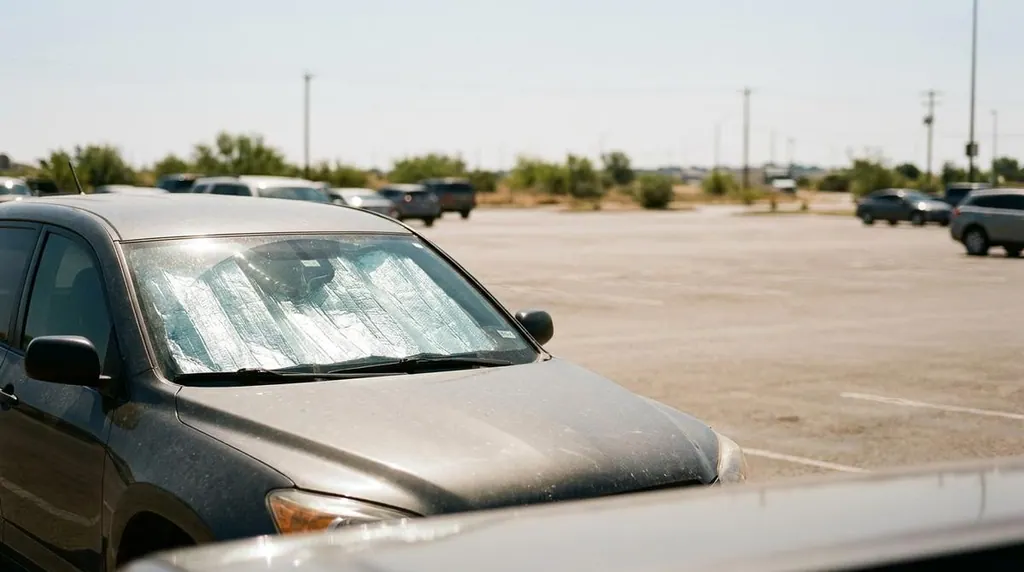
A sunshade helps keep the cabin cooler, which fueleconomy.gov recommends so the AC has less work to do. If a car has aftermarket tint, confirm it meets Texas rules with the seller or a tint shop before you buy.
Educational content. Anthony does not sell, broker or arrange vehicle sales in Texas. Confirm fees and rules with the office named in each source before you pay anything.