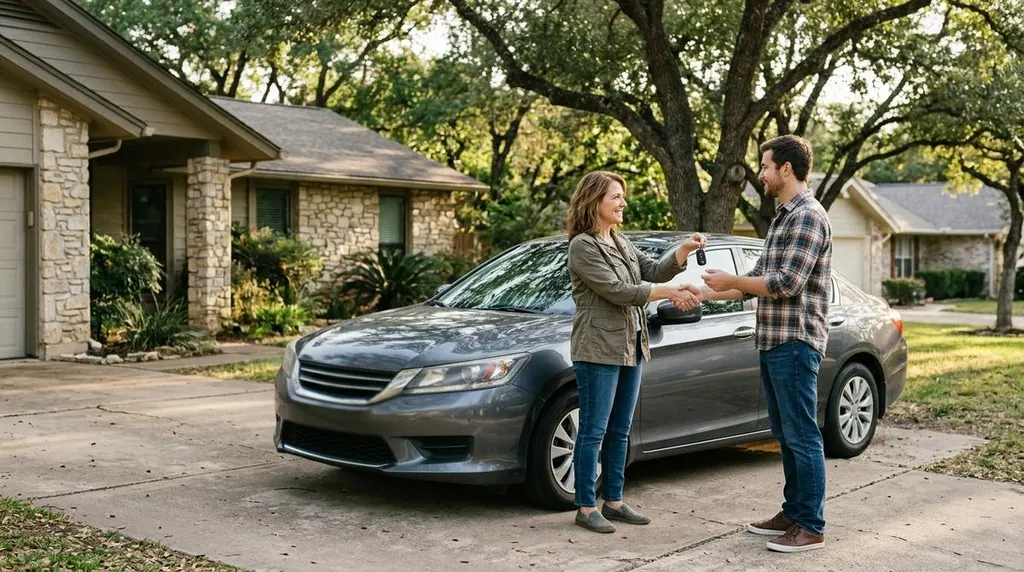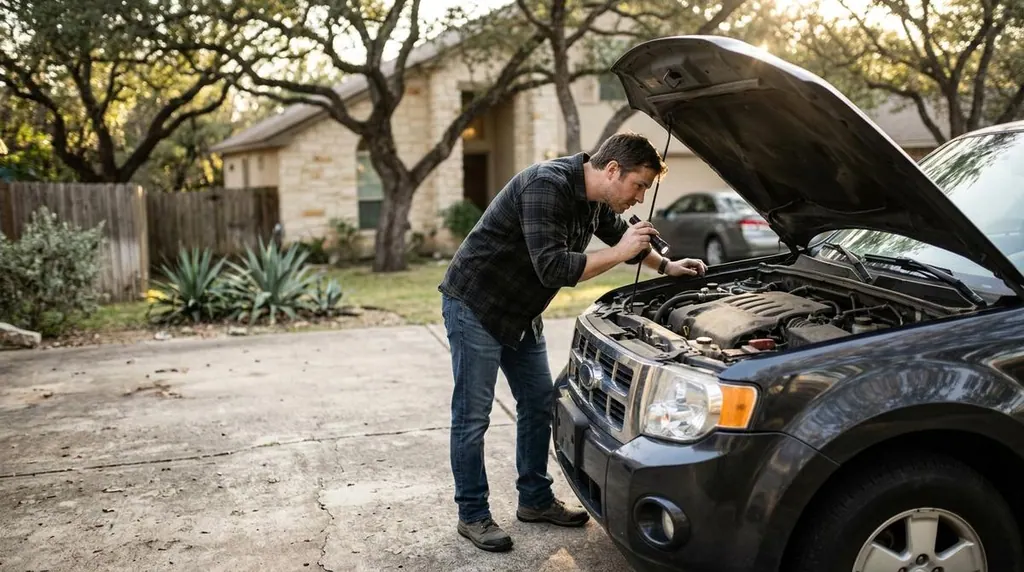
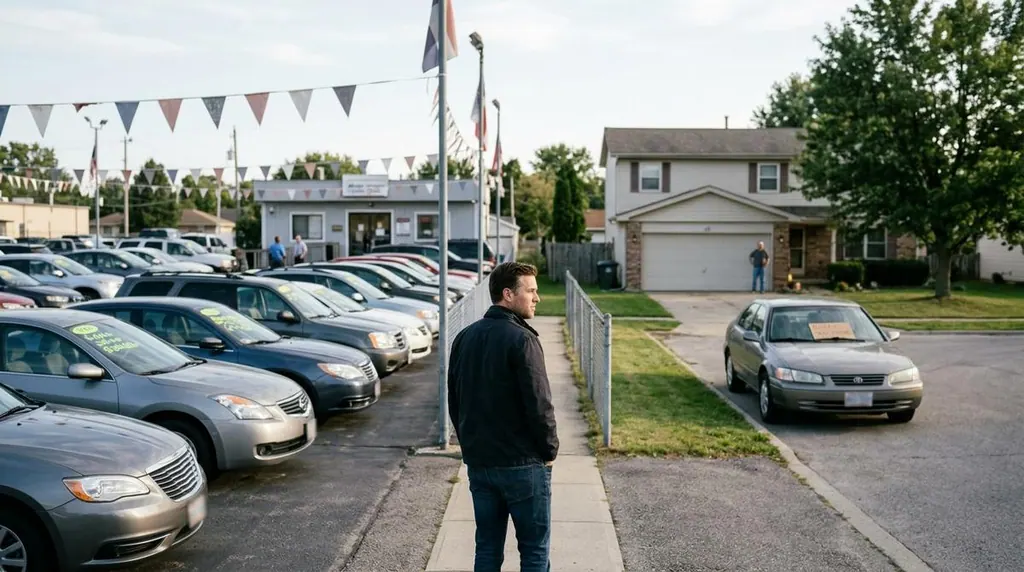
In the dealer vs private seller choice in Texas, a licensed dealer gives you more built-in protection: an FTC Buyers Guide on the car, metal plates at the sale, and title paperwork filed for you. A private seller can mean a lower price, but the sale is usually as is and you handle the title, tax and registration yourself within 30 days. The right choice depends on how much checking and paperwork you are ready to do.
This guide compares the two side by side so you can decide before you shop.
Dealer vs private seller in Texas: the short comparison
| Topic | Licensed dealer | Private seller |
|---|---|---|
| License | Must hold a dealer general distinguishing number (GDN) (Transportation Code 503.021) | No license needed if selling fewer than five vehicles of the same type a year, titled in their own name (503.024) |
| Buyers Guide | Required on every used car if the dealer sells more than five in 12 months (FTC) | Not required |
| Warranty | Shown on the Buyers Guide: As Is, or a dealer warranty | Usually as is unless your written agreement says otherwise (FTC) |
| Sales tax | Dealer collects 6.25 percent and sends it to the county (Comptroller) | You pay at the county tax office, on the greater of price or 80 percent of SPV (Comptroller) |
| Plates | Dealer issues metal plates at the sale (TxDMV HB 718) | Seller usually removes plates; you may need a 5-day Vehicle Transit Permit (TxDMV) |
| Title and registration | Dealer generally processes within 30 days, or 45 days if it financed the car (TxDMV) | You file within 30 days of sale or pay a penalty (TxDMV) |
| Where to complain | TxDMV dealer complaints and the Texas Attorney General | TxDMV dealer complaints cover licensed dealers; for a private sale, your written records are your main protection |
Buying from a licensed dealer
What you get
A Buyers Guide on the window. It shows whether the car is sold "As Is - No Dealer Warranty" or with a warranty, what share of repair costs the dealer pays under any warranty, and the car's major mechanical and electrical systems (FTC). The Buyers Guide overrides contrary terms in the sales contract. If the sale is conducted in Spanish, the dealer must provide a Spanish Buyers Guide (FTC).
Plates at the sale. Since July 1, 2025, Texas dealers no longer print paper buyer tags. They issue metal license plates at the time of sale (TxDMV HB 718).
Paperwork done for you. The dealer collects sales tax and processes title and registration. If the deadline passes without your title or registration, you can file a complaint with TxDMV.
A regulator to complain to. TxDMV takes complaints against licensed dealers through its online complaint system and can take administrative action, though it cannot recover money for you. Its help line is (888) 368-4689 (TxDMV). You can also file with the Texas Attorney General Consumer Protection Division or call (800) 621-0508.
What to watch for
- "As Is" still means as is. Texas law lets sellers exclude implied warranties with words like "as is" (Business and Commerce Code 2.316). A dealer car marked As Is has no dealer warranty after you drive away. See Buyers Guide, as is and used car warranties.
- Open recalls. Federal law does not require dealers to fix recalls on used cars before selling them (FTC). Check the VIN yourself at NHTSA.gov/recalls.
- "Certified" is not an independent inspection. The FTC says a mechanical inspection is a good idea even if the dealer certified and inspected the car (FTC).
- Add-ons and service contracts. A service contract is often called an "extended warranty," but it is not a warranty. Check what it covers, its deductibles and exclusions, and whether it duplicates coverage you already have (FTC).
Buying from a private seller
What you get
- A price set by one owner, not a business, which can leave room below dealer asking prices. Always weigh the price against the condition the inspection finds.
- A direct line to the owner, who may know the car's history and have service records.
- Room to negotiate on your own terms and timing.
What you give up
- No Buyers Guide and no warranty in most cases. The FTC says a private sale "probably will be on an 'as is' basis" unless the agreement says otherwise.
- No one files for you. You must title the car within 30 days of the sale. Filing on day 31 or later starts a $25 penalty that grows to as much as $250 (TxDMV Title Manual). Sales tax paid late adds 5 or 10 percent (Comptroller).
- More fraud risk. Buyers from unlicensed sellers who flip cars risk getting a car without good title, a salvage car that cannot lawfully be driven, or a stolen car (TxDMV Dealer Manual). Read curbstoning in Texas.
The full process is in buying from a private seller in Texas.
The steps that apply either way
Whoever sells the car, do these yourself:
- Run the VIN through TxDMV Title Check, NHTSA recalls and NICB VINCheck. See free VIN check tools.
- Have an independent mechanic inspect the car. Use the pre-purchase inspection checklist.
- Test drive on city streets and highway with a written checklist of what to test.
- Compare the odometer with the title and records.
- Get proof of Texas liability insurance (at least 30/60/25, per TDI) before you drive away.
- Read every document before you sign.
Costs beyond the sticker price
The price on the windshield or the listing is not what you pay. Here is what changes between the two kinds of sale, using the official fee figures.
| Cost | Licensed dealer | Private seller |
|---|---|---|
| Sales tax | 6.25 percent of the price minus any trade-in, collected by the dealer (Comptroller) | 6.25 percent on the greater of the price or 80 percent of SPV, paid by you at the county (Comptroller) |
| Title application fee | Part of the dealer's paperwork | $33 in every Austin to San Antonio corridor county (TxDMV Title Manual) |
| Late penalties | The dealer's deadline, not yours | $25 delinquent transfer penalty from day 31, up to $250, plus 5 or 10 percent on late sales tax |
| Registration | Processed by the dealer | $50.75 base fee for a passenger vehicle or light truck, plus $1 for TexasSure and local county fees (TxDMV fee chart) |
| Getting home | Metal plates at the sale | Free 5-day Vehicle Transit Permit if the seller keeps the plates |
If you pay a private seller less than 80 percent of the car's SPV, a certified appraisal (Form 14-128) obtained within 30 calendar days can set the taxable value, but it cannot be lower than the price you paid (Comptroller).
Private-sale paperwork checklist
When you buy from a private seller, the paperwork is yours. Before you hand over money, make sure you will leave with:
- The title, signed by the seller, with the date of sale and odometer reading filled in (TxDMV).
- Form 130-U, signed by the seller and showing the sales price.
- A seller whose ID matches the name on the title. If it does not match, stop.
- Proof of your own Texas liability insurance before you drive.
- A plan to reach your county tax office within 30 days.
The seller should also file a Vehicle Transfer Notification within 30 days, which protects them from tickets and tolls after the sale (TxDMV Form VTR-346).
Common mistakes on each side
At a dealer:
- Signing before reading the Buyers Guide and contract side by side.
- Treating "certified" as a substitute for your own inspection.
- Accepting add-ons or a service contract without reading what they cover.
- Not checking open recalls because "the dealer would have fixed it."
With a private seller:
- Paying before seeing the physical title.
- Letting the 30-day title deadline slip and paying a penalty.
- Buying from someone who is not the titled owner, a sign of curbstoning.
- Skipping the inspection because the seller "seems honest."
Local notes for Austin and San Antonio
You title at your own county tax office. In a private sale you file with the county tax assessor-collector where you live. The Travis County Tax Office main location is at 2433 Ridgepoint Dr in Austin, with branches around the county (Travis County Tax Office). Bexar, Williamson, Hays, Comal and the other corridor counties run their own offices; check your county's site for hours and ID rules before you go.
Emissions depends on the county. Travis and Williamson counties require an emissions test before registration, and Bexar County joined on November 1, 2026. Hays, Comal, Guadalupe and Caldwell are not on the list (TCEQ). A dealer sale or a private sale makes no difference here; where you register does.
Safety inspections are gone for both. Since January 1, 2025, non-commercial vehicles no longer need a safety inspection to register (Texas DPS). Whether you buy from a dealer in north Austin or a private seller in Schertz, the independent inspection you arrange is the only one the car gets.
What I would do
If I were buying my own car in Central Texas, the seller type would be my second question, not my first. My first question would be whether the specific car passes a title check and an independent inspection.
If I wanted a simple, one-visit purchase, or I needed the car the same day, I would lean toward a licensed dealer and read the Buyers Guide before anything else. If I found a well-documented car from a private owner with service records and a clean title in their own name, I would be comfortable buying it privately and handling the county paperwork myself, as long as I could get it to a mechanic first. What I would not do is buy from a "private seller" who has several cars listed, or whose name is not on the title. That is not a private sale, and it gives you the risks of both sides with the protection of neither.
How to decide
Choose a licensed dealer if you want the Buyers Guide disclosure, plates on the spot, and title work handled for you, and you are willing to pay for that.
Choose a private seller if you are comfortable checking the title and seller identity yourself, arranging an inspection, and visiting the county tax office within 30 days.
Either way, the car's condition matters more than who sells it. A well-inspected private-sale car is a better buy than an uninspected dealer car. For the full buying process, start with how to buy a used car in Texas.
Sources
- Texas Transportation Code Chapter 503
- Texas Business and Commerce Code Chapter 2
- FTC - Dealer's Guide to the Used Car Rule
- FTC - Buying a Used Car From a Dealer
- FTC - Buying a Used Car (PDF)
- Texas Comptroller - Motor Vehicle Sales and Use Tax
- Texas Comptroller - Private-Party Transactions and SPV
- TxDMV - House Bill 718
- TxDMV - Temporary Registration
- TxDMV - Complaints
- TxDMV - Buying or Selling a Vehicle
- TxDMV - Title Check
- TxDMV Motor Vehicle Title Manual
- TxDMV Motor Vehicle Dealer Manual
- Texas Attorney General - File a Consumer Complaint
- Texas Department of Insurance - Auto insurance guide
- NHTSA - Recalls
- NICB - VINCheck
- TxDMV - Registration fee chart
- TxDMV - Form VTR-346 Vehicle Transfer Notification
- Travis County Tax Office - Visit us
- TCEQ - Vehicle emissions inspection overview
- Texas DPS - Vehicle safety inspection program changes
Frequently asked questions
Do private sellers in Texas need a dealer license?
Not if they sell fewer than five vehicles of the same type in a calendar year that are owned and registered in their name (Transportation Code 503.024). Selling more, or selling cars not titled in their name, requires a GDN.
Is sales tax different at a dealer than in a private sale?
The rate is 6.25 percent in both. In a private sale, the county taxes the greater of the price paid or 80 percent of Standard Presumptive Value; SPV does not apply to dealer sales (Comptroller).
Do Texas dealers still give paper tags?
No. Since July 1, 2025, dealers issue metal license plates at the time of sale under House Bill 718 (TxDMV).
Can I return a used car to a Texas dealer?
The FTC says an "as is" sale means the dealer will not pay for problems after the sale. Any return or warranty rights depend on what is written on the Buyers Guide and contract (FTC).
Who files the paperwork in a private sale in Texas?
You do. The buyer files the title application at the county tax office within 30 days, and the seller should file a Vehicle Transfer Notification within 30 days to protect themselves (TxDMV, Form VTR-346).
Who do I complain to about a Texas dealer?
File with TxDMV's dealer complaint system or the Texas Attorney General Consumer Protection Division (TxDMV, Texas AG).
Educational content. Anthony does not sell, broker or arrange vehicle sales in Texas. Confirm fees and rules with the office named in each source before you pay anything.