To check recalls before buying a used car, enter its 17-character VIN at NHTSA.gov/recalls or call the NHTSA Vehicle Safety Hotline at 1-888-327-4236. Do this before you pay, because federal law does not require dealers to fix recalls on used cars before selling them. If a recall is open, the repair is normally free at a franchised dealer of that brand, but you may have to arrange it yourself.
This guide shows how to run the check, read the result, and decide what to do about an open recall.
Why recall checks matter on a used car
A safety recall is the manufacturer's fix for a safety-related defect. On a used car, there is no guarantee anyone has had it done:
- The FTC notes that federal law does not require dealers to fix recalls on used cars before selling them (FTC).
- A private seller may not know a recall exists.
- A car that has changed hands several times may have missed recall notices meant for an earlier owner.
A recall check takes a few minutes and costs nothing.
Step 1: Get the correct VIN
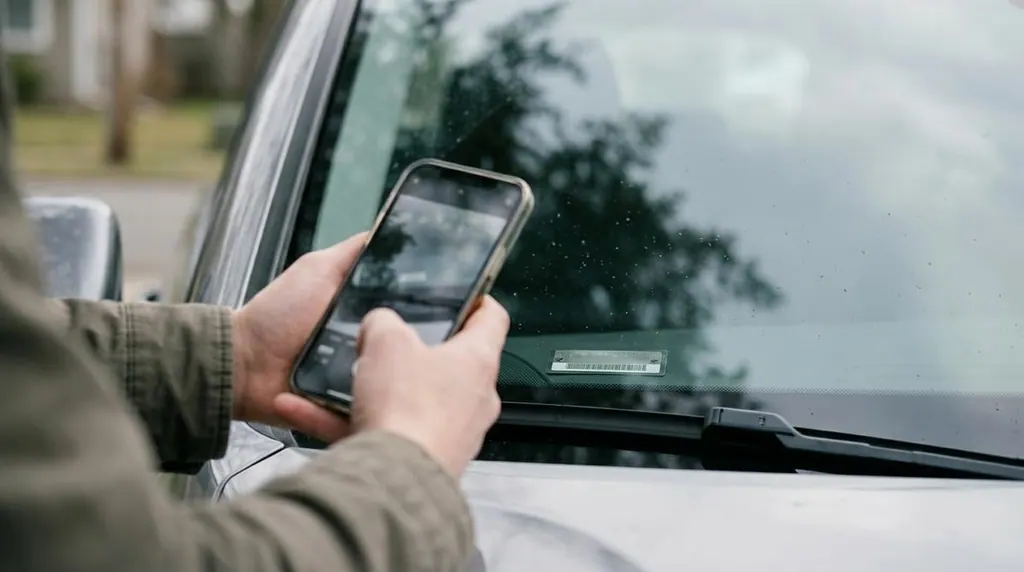
The VIN is 17 characters, letters and numbers. You can find it:
- On the driver's side of the dashboard, visible through the windshield.
- On the driver's door jamb sticker.
- On the title and registration.
- On insurance cards and many service records.
Get it from the car itself, not just the listing. Check that the dashboard VIN, the door jamb VIN and the title all match. TxDMV advises buyers to confirm the VIN is "present, secure and unaltered" (TxDMV). A mismatch is a bigger problem than any recall.
Step 2: Run the VIN at NHTSA
- Go to NHTSA.gov/recalls.
- Enter the full VIN.
- Read the result for open (unrepaired) recalls.
- For each open recall, note the summary, the safety risk, and the remedy.
If you cannot get online, call the NHTSA Vehicle Safety Hotline at 1-888-327-4236.
Know the limits of the lookup
- Age limit. The NHTSA VIN search does not show recalls older than 15 years (NHTSA). For an older car, also ask the manufacturer or a franchised dealer of that brand.
- Coverage. The lookup covers recalls from major automakers, motorcycle manufacturers and some medium and heavy truck manufacturers (NHTSA). Equipment you add later, such as aftermarket tires or a child seat, has its own recall lists.
- Typos give false results. One wrong character can return the wrong car or no result. Double-check the VIN.
- Recalls change. New recalls are announced all the time. Run the check again close to your purchase date.
Step 3: Check the manufacturer and the model
The VIN lookup tells you about one car. To understand the model, also look at the bigger picture:
- Model-level recall and complaint history. Our car data pages collect NHTSA recall and complaint information for common models, such as the Toyota Camry, Ford F-150 and Honda Civic.
- Owner complaints. Complaints are not recalls, but a pattern can show problems worth asking your mechanic about. Read how to read NHTSA complaint data.
- The manufacturer's own lookup. Many manufacturers also offer a recall search by VIN on their owner websites.
Step 4: Decide what to do about an open recall
| Situation | What to do |
|---|---|
| No open recalls | Keep a screenshot with the date, then continue with the inspection |
| Open recall, remedy available | Ask the seller to have it repaired before the sale, or plan the repair yourself and confirm a franchised dealer can do it |
| Open recall, remedy not yet available | Ask how the manufacturer advises owners to drive the car until parts arrive, and factor that into your decision |
| Recall marked as a serious safety risk | Do not drive the car until the recall instructions say it is safe; consider walking away |
| Seller claims a recall was fixed but the lookup says open | Ask for the repair order from a franchised dealer |
Recall repairs are normally free at a franchised dealer of that brand (NHTSA). Call the service department with the VIN to confirm parts are available and how long the repair takes.
Step 5: Ask for records
Ask the seller for repair orders showing recall work. A repair order shows what work was done and when. Keep these with your purchase records. They help when you resell, too.
Recalls, warranties and the Lemon Law are different
- A recall is a safety fix the manufacturer must offer, usually free.
- A warranty covers defects for a set time or mileage. See Buyers Guide, as is and used car warranties.
- The Texas Lemon Law covers defects under the manufacturer's original warranty only. See does Texas have a used car lemon law.
A car sold As Is can still get free recall repairs. As Is affects what the seller owes you, not what the manufacturer owes under a recall.
How to read the result
The lookup gives you one of three answers, and each one means something different for your purchase.
"0 unrepaired recalls"
This means the manufacturer has no open safety recall on record for that VIN within the lookup window. It does not mean the car is in good shape. It says nothing about wear, accident damage, flood history or maintenance. Treat it as one box checked, then move on to the title check, the inspection and the test drive.
An open recall with a remedy available
The fix exists and a franchised dealer of that brand can do it. This is the easiest case. The questions are who arranges it and when. I would rather have the seller get it done before I pay, because then I can see the repair order. If the seller will not, I would call the service department myself before the sale to ask how soon they can schedule it.
An open recall with no remedy yet
Sometimes a manufacturer announces a recall before parts or a repair procedure exist. The recall summary usually explains the risk and any interim advice. Read it closely. Some interim advice is mild. Some tells owners not to drive the car, or not to park it in a garage, until the repair is done. That second kind changes the deal for me. A car I cannot safely drive to work is not a car I want to own yet.
Recall checks for different ways of buying in Texas
The check is the same everywhere, but the timing and leverage change with the seller.
| Where you buy | When to run the check | What you can ask for |
|---|---|---|
| Franchised dealer of the same brand | Before you agree on a price | Ask them to complete open recalls before delivery; they are set up to do the work |
| Independent dealer | Before you agree on a price | Ask for the repair order if they say it was fixed; if not, plan the repair yourself |
| Private seller | Before you meet in person | Ask if they received recall letters and whether the work was done |
| Auction | Before you bid | Usually nothing. Auction cars are commonly sold as is, so budget the time to get the repair done yourself |
If you are buying at an auction, add the recall check to your pre-bid routine. Our auction checklist and the auctions hub cover the rest of that process.
Example: an open recall on a private-sale car
This is a made-up scenario, only to show the order of steps.
- A seller in Round Rock sends you the VIN of a sedan.
- You run it at NHTSA.gov and see one open recall with a remedy available.
- You ask the seller whether they got a recall letter. They say no, because they bought the car used.
- You call a franchised dealer of that brand with the VIN. The service desk confirms the recall applies and tells you how to schedule it.
- You and the seller agree in writing that the sale goes ahead and you will handle the repair, or that the seller gets it done first. Either way, the decision is made before money changes hands.
Nothing in this example changes the price by itself. It just keeps the recall from being a surprise after the sale.
Common mistakes when you check recalls before buying a used car
- Using the VIN from the listing only. Listings can contain typos, and a dishonest seller can post the VIN of a different car. Copy it from the dashboard and door jamb.
- Checking once, weeks early. New recalls are announced all the time. Run the check again the day you buy.
- Treating "no recalls" as a clean bill of health. A recall check is about manufacturer defects. It does not cover damage, neglect or title brands. Run TxDMV Title Check too.
- Assuming the seller fixed it. If the lookup still shows the recall open, ask for the repair order.
- Assuming an As Is sale means you pay. As Is is about the seller's obligations. Recall repairs are normally free at a franchised dealer of that brand (NHTSA).
- Forgetting older cars. For a car older than 15 years, the NHTSA lookup will not show older recalls, so ask the manufacturer.
- Skipping the model view. One car's lookup does not show complaint patterns. Our car data pages and the NHTSA complaint guide help with that.
Stay on top of recalls after you buy
Recall checks do not end at the sale. You can sign up at NHTSA.gov/Alerts to be notified if your vehicle is affected by a future recall (U.S. Department of Transportation). Do it the same day you get the car.
Titling the car in your name quickly also helps. In a private sale you have 30 days from the date of sale to title it at your county tax office (TxDMV), and an updated owner record gives any mailed notice a better chance of reaching you. Our title transfer guide walks through that visit.
What I would do
If I were buying a used car around Austin this week, I would run the NHTSA lookup three times: when I first see the listing, the night before I go look at the car, and the morning I pay. It costs nothing and takes a minute each time.
If there were an open recall with a remedy available, I would not walk away by default. I would call a franchised dealer of that brand, ask how soon they can do it, and make the timing part of the deal. If the recall had no remedy yet and the summary told owners not to drive the car, I would pass, or at least wait until the fix exists. I would also sign up for NHTSA alerts before I drove the car home.
Your recall check checklist
- Copy the VIN from the dashboard and confirm it matches the door jamb and title.
- Enter it at NHTSA.gov/recalls.
- Note every open recall and its remedy.
- For a car more than 15 years old, also ask the manufacturer.
- Look up the model's recall and complaint history on our car data pages.
- Ask the seller for repair orders for any past recall work.
- Call a franchised dealer of that brand about parts and timing for open recalls.
- Run the check again just before you buy.
Then continue with the other VIN checks in free VIN check tools and the full process in how to buy a used car in Texas.
Sources
- NHTSA - Recalls
- FTC - Buying a Used Car (PDF)
- TxDMV - Buying or Selling a Vehicle
- TxDMV - Title Check: Look Before You Buy
- U.S. Department of Transportation - NHTSA recall alerts briefing
Frequently asked questions
Is checking recalls by VIN free?
Yes. The NHTSA lookup at NHTSA.gov/recalls is free, and you can also call 1-888-327-4236 (NHTSA).
Does a Texas dealer have to fix recalls before selling a used car?
Federal law does not require dealers to fix recalls on used cars before selling them (FTC). Check the VIN yourself and ask about any open recall before you sign.
Who pays for a recall repair on a used car?
Recall repairs are normally free at a franchised dealer of that brand (NHTSA). Call the service department with the VIN to confirm before you buy.
Why does the NHTSA lookup show no recalls on my old car?
The NHTSA VIN search does not show recalls older than 15 years. Ask the manufacturer or a franchised dealer about older recalls.
Can I get an email if my car gets a new recall later?
Yes. Sign up at NHTSA.gov/Alerts to be notified if your vehicle is affected by a future recall (U.S. Department of Transportation).
Does an As Is sale cancel a recall?
No. As Is limits what the seller must pay after the sale. A manufacturer's recall remedy is separate.
Educational content. Anthony does not sell, broker or arrange vehicle sales in Texas. Confirm fees and rules with the office named in each source before you pay anything.